
Introduction
The global golf cart market is experiencing steady and sustainable growth, driven by rising demand for electric and solar-powered carts, expanding applications beyond golf courses, and increasing emphasis on low-emission mobility solutions.
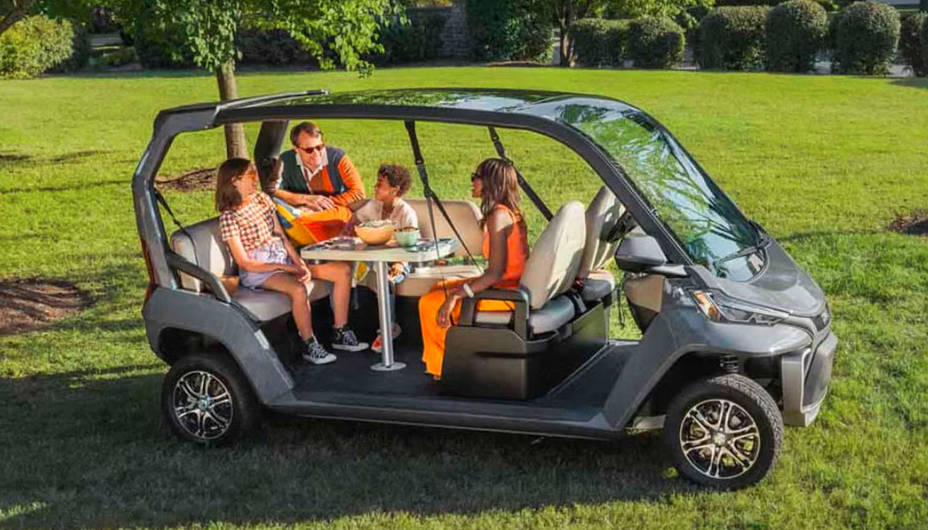
Golf carts are no longer limited to recreational use. Today, they play a critical role in resorts, airports, gated communities, industrial parks, theme parks, and commercial facilities, offering efficient, quiet, and environmentally friendly short-distance transportation.
Golf Cart Market Size and Forecast—
Market size (2025E): USD 2.45 billion
Expected market size (2033): USD 3.96 billion
CAGR (2026–2033): 6.21%
Base year: 2025
Forecast period: 2026–2033
This growth reflects the global shift toward electric mobility, operational efficiency, and sustainable transportation infrastructure.
Key Market Trends
Several structural trends are reshaping the golf cart industry:
Strong shift from gasoline carts to electric and solar-powered golf carts
Growing integration of smart technologies, including GPS tracking and fleet management systems
Expanding use of golf carts in airports, resorts, residential communities, and industrial facilities
Increasing demand for customized, multi-purpose carts tailored to commercial operations
Continuous innovation in battery efficiency, charging systems, and solar integration
These trends indicate that golf carts are evolving into professional utility vehicles rather than purely recreational products.
Market Growth Drivers—
Rising Demand for Eco-Friendly Golf Carts
Electric and solar-powered golf carts are becoming the preferred choice due to:
Lower operating and maintenance costs
Reduced noise and emissions
Compatibility with sustainability policies and clean energy initiatives
Compared to traditional gasoline carts, electric and solar models can reduce CO₂ emissions by 20–25%, making them attractive for both private and public facilities.
Market Restraints
High Initial Investment and Infrastructure Limitations
Despite long-term cost advantages, adoption can be constrained by:
Higher upfront costs for batteries, solar panels, and electronic systems
Battery replacement and lifecycle maintenance expenses
Limited charging infrastructure in developing regions
These factors may slow adoption in price-sensitive markets, particularly for large-scale deployments.
Market Opportunities
Expanding Applications Beyond Golf Courses
One of the strongest growth opportunities lies in non-golf applications, including:
Airports and transportation hubs
Resorts and theme parks
Gated communities and smart cities
Industrial parks and logistics facilities
Golf carts offer an ideal balance of compact size, low speed, safety, and environmental performance, making them suitable for a wide range of utility and transport tasks.
Market Segmentation Overview—
By Product Type
Electric golf carts dominate the market due to quiet operation and low maintenance
Solar-powered carts represent the fastest-growing segment, supported by energy efficiency and self-charging capabilities
By Seating Capacity
2-seater carts remain the most widely used due to flexibility and cost efficiency
6-seater carts are growing rapidly, especially in resorts, airports, and commercial facilities
By Application
Golf courses continue to lead overall demand
Airports are the fastest-growing segment, driven by passenger and staff mobility needs
By Sales Channel
Direct sales dominate due to customization, bulk purchasing, and after-sales service
Online channels are growing quickly as digital procurement becomes more common
Regional Market Insights—
North America
North America holds the largest market share, supported by:
Strong golf and resort infrastructure
High adoption of electric carts
Government incentives for sustainable mobility
Asia-Pacific
Asia-Pacific is the fastest-growing region, driven by:
Rapid urbanization
Expansion of tourism and hospitality sectors
Government support for electric vehicles
Europe
Europe’s market growth is supported by:
Strict emission regulations
Strong sustainability policies
Growing use of golf carts in urban and recreational facilities
Latin America & Middle East / Africa
These regions are experiencing gradual growth as environmental awareness and infrastructure development increase.
Competitive Landscape
The golf cart market is moderately consolidated, with leading manufacturers focusing on electric platforms, customization, and smart technologies.
Key global players include:
Club Car
E-Z-GO
Yamaha Golf-Car Company
Polaris Industries
Garia
Evolution Electric Vehicles
HDK Electric Vehicle
Melex
Advanced EV
- Brusway
At the same time, Asian manufacturers are becoming increasingly competitive, offering cost-effective, customizable solutions for global markets.
Conclusion
The global golf cart market is transitioning into a multi-application electric mobility sector. Driven by sustainability, customization, and expanding commercial use cases, golf carts are becoming essential vehicles for modern facilities.
For manufacturers, distributors, and operators, success in this market will depend on:
Electric and solar technology integration
Application-focused vehicle design
Reliable after-sales service and fleet solutions
As demand continues to diversify, golf carts will play an increasingly important role in clean, efficient, short-distance transportation worldwide.